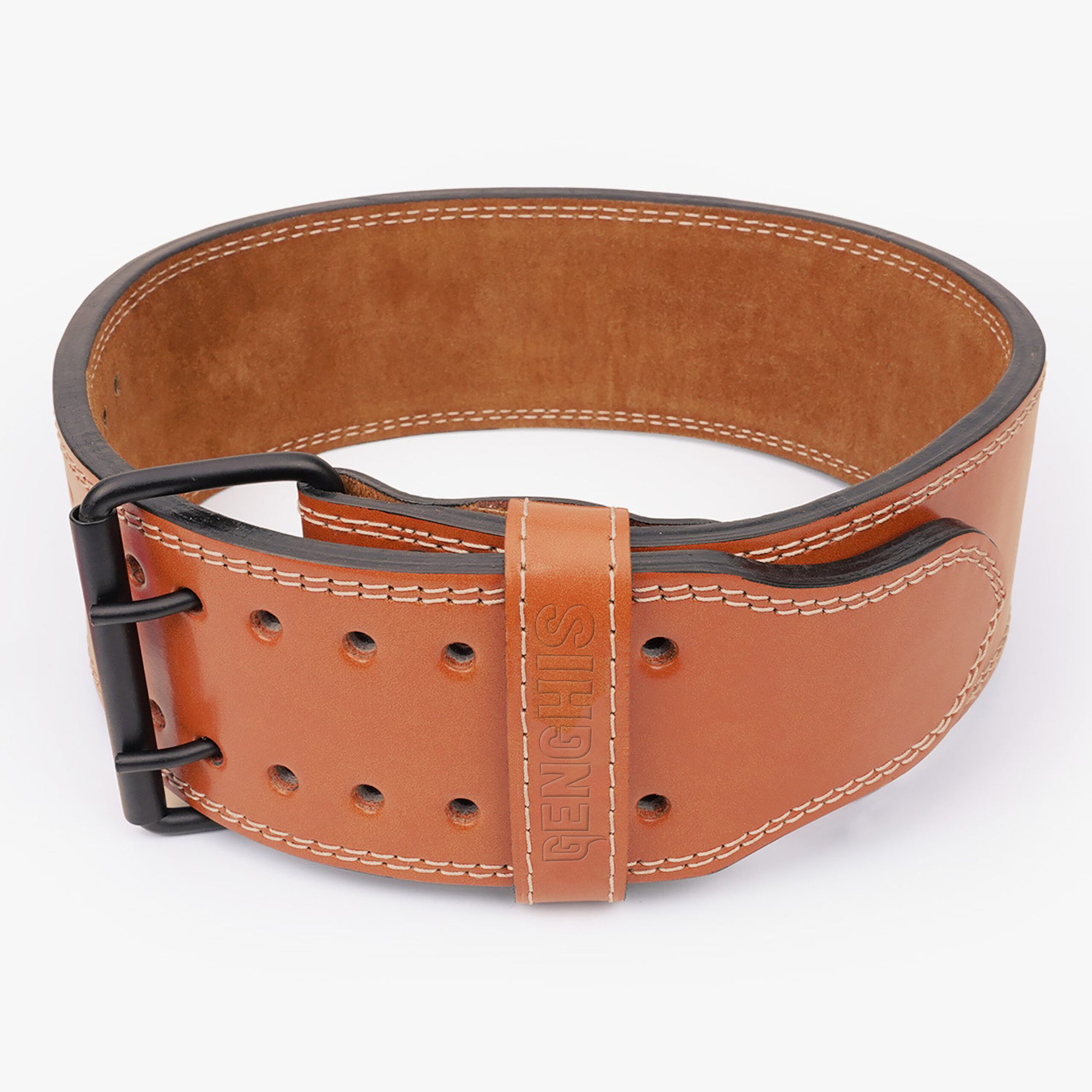
BEST LEATHER WEIGHTLIFTING BELTS: WHAT TO LOOK FOR AND WHY QUALITY MATTERS
Leather weightlifting belts are the gold standard in strength sports for one consistent reason: properly constructed leather outperforms every synthetic alternative in rigidity under sustained heavy loading. The stiffness of full-grain leather creates the bracing surface that generates the highest intra-abdominal pressure per unit of core engagement, and that IAP increase is the primary mechanism by which a belt protects the lumbar spine during heavy squats, deadlifts, and overhead presses. Understanding what makes a leather belt genuinely excellent, rather than just adequately functional, is the knowledge that separates a smart long-term investment from an expensive mistake.
THE CORE QUALITY VARIABLES IN LEATHER WEIGHTLIFTING BELTS
LEATHER GRADE: THE FOUNDATION OF EVERYTHING
The most important construction variable in any leather weightlifting belt is the grade of leather used in its construction. Full-grain leather is taken from the outermost layer of the animal hide and retains the complete natural fiber structure that provides maximum tensile strength, abrasion resistance, and long-term rigidity under repeated mechanical stress. A full-grain leather belt that is properly conditioned will maintain its structural stiffness for a decade or more of heavy training use. Split-grain leather is taken from interior layers of the hide after the full-grain has been separated out. It is softer, less structurally dense, and progressively loses rigidity with sustained use because the fiber structure cannot withstand the compressive loading of repeated bracing as effectively as full-grain construction. Research on belt stiffness and intra-abdominal pressure confirms the direct performance link between belt rigidity and IAP generation, making leather grade a primary performance variable rather than merely a durability or aesthetic consideration.
THICKNESS: 10MM VS 13MM
The 10mm thickness is the international powerlifting federation standard for competition and the most widely used option for serious training athletes. It provides the rigidity needed to generate meaningful IAP support while remaining thin enough to allow comfortable hip flexion at the extremes of deep squat positioning. The 13mm option is used by some elite powerlifters who want maximum rigidity for the heaviest possible loading but is less comfortable during extended training sessions and at deep squat depths. For most athletes, 10mm is the optimal balance of rigidity and range-of-motion comfort that serves both training and competition use effectively.
WIDTH AND SHAPE
The standard powerlifting belt width is 4 inches, which is the maximum width allowed in IPF competition. A 4-inch belt provides the most surface area in contact with the torso, maximizing the bracing area available for IAP generation. Some athletes with shorter torsos find that a 4-inch belt contacts the hip bones or lower ribs during deep squat positioning, making a 3-inch width more comfortable without meaningfully compromising support. The 4-inch leather weightlifting belt is sized appropriately for most athlete proportions and provides the full contact area that competition-standard performance requires.
CLOSURE SYSTEM: LEVER VS PRONG
The closure system determines the practical usability of a leather belt across a training session. Prong closures thread through holes in the leather and allow adjustment in small increments, which is useful for athletes who prefer different tensions for squatting versus deadlifting. The trade-off is slower application time between sets. The lever belt clicks into a fixed position in seconds and releases as quickly, making it the preferred practical choice for athletes doing multiple heavy sets per session who want consistent tension on every application. Set the lever position once at the correct tension for your training and the belt is ready instantly for every set of every session.
HOW TO EVALUATE A LEATHER BELT BEFORE BUYING
When evaluating leather weightlifting belts, start with leather grade. The brand should specify full-grain leather explicitly, not just genuine leather or premium leather which are marketing terms that can describe split-grain products. Examine the edge finishing: quality leather belts have burnished or finished edges that feel smooth to the touch and show no fraying or raw leather exposure. Check the stitching at the buckle or lever attachment point: double or triple bar-tack stitching across a wide zone indicates that the manufacturer understands where stress concentrates and has built to handle it. Look for extended-use reviews from competitive powerlifters who have trained with the specific belt for six months or more at high frequency, as these reviews reveal the long-term performance characteristics that first-session impressions cannot predict.
BREAKING IN A NEW LEATHER BELT
Every genuine full-grain leather belt requires a break-in period before it reaches its optimal combination of stiffness and comfort. New leather belts are typically stiffer than they will be after several weeks of use and may create minor discomfort at the edges during the first several training sessions as the leather begins conforming to the body. Apply a quality leather conditioner to both surfaces before the first training session and again after the first two weeks of use. This accelerates the conforming process without compromising the structural integrity that makes the belt mechanically effective. After four to six weeks of regular training, the leather will have developed the custom fit around the specific geometry of the user’s torso that makes full-grain leather belts the preference of experienced lifters who have trained through multiple belt types.
MAINTAINING YOUR LEATHER BELT FOR MAXIMUM LIFESPAN
Wipe the belt down with a dry cloth after every training session to remove chalk and sweat before they saturate the leather fiber structure. Apply leather conditioner every two to three months depending on training frequency and climate conditions, with more frequent conditioning needed in dry or cold environments where leather loses moisture content more rapidly. Store the belt flat or hanging straight rather than rolled tightly, which can cause the leather to develop a permanent curve that alters its fit and affects function during training. Keep the lever mechanism clean by wiping the contact surfaces with a dry cloth. A well-maintained full-grain leather belt from a quality manufacturer lasts a decade or more of serious training use, making the initial investment the most economical long-term choice when considered on a cost-per-session basis across that service life.
COMPLETE HEAVY TRAINING SETUP AROUND YOUR BELT
A leather weightlifting belt performs best as the centerpiece of a complete heavy training support system. On heavy squat days, pair the belt with knee sleeves for joint warmth and proprioceptive support throughout the session and knee wraps for maximum effort sets where elastic assistance and additional compression are warranted. On heavy deadlift days, lifting straps eliminate grip as the limiting variable so that posterior chain capacity rather than forearm endurance determines when the set ends. On heavy pressing days, wrist wraps maintain wrist alignment under sustained load. This complete system addresses every major joint under heavy compound loading in a single integrated equipment approach.
FINAL WORDS
The best leather weightlifting belt for your training is the one built from full-grain leather at appropriate thickness and width, with a closure system that matches your training workflow, and from a manufacturer who builds to these standards consistently rather than occasionally. The Genghis Fitness 10mm lever belt and powerlifting leather belt are built to exactly these standards: full-grain leather, quality hardware, appropriate stitching, and the construction consistency that produces the same reliable performance in year three that it delivers in month one. Invest in quality leather, break it in properly, maintain it consistently, and let the stiffest available bracing surface do the spinal protection work it was designed to deliver.
Certified strength and conditioning specialists with over 10 years of experience in powerlifting, nutrition, and evidence-based fitness content. Based in New York City.
Related guides and comparisons are collected in the weightlifting belt guides, covering all belt materials, thicknesses, closure systems, and sport-specific recommendations in one location.