Best Weightlifting Belts: How to Identify Quality and Match Belt to Training Goal
Finding the best weightlifting belt is not about the most expensive option or the most heavily marketed one. It is about matching the belt’s construction properties to your specific training style, your body proportions, and the loads you work with. A belt that suits a competitive powerlifter perfectly may be wrong for a CrossFit athlete who needs fast transitions between barbell work and gymnastics in the same session. Matching properties to requirements is the only reliable selection method.
This guide covers what actually defines belt quality, how to evaluate whether a given belt’s features align with your training needs, and which Genghis Fitness options suit each primary application.
The Properties That Define Belt Quality
Leather Thickness and Single-Layer Construction
For leather belts, quality begins with the hide. A consistent single layer of vegetable-tanned or chrome-tanned leather at a specified thickness, whether 10mm or 13mm, behaves predictably across the break-in process and maintains its structural properties for years. Laminated leather made from multiple thin layers glued together can delaminate under repeated flexion. Single-layer construction is the quality standard worth verifying before purchasing.
Hardware Durability and Engineering
The buckle, prong, or lever mechanism bears the full load of every tightening and release cycle across the belt’s entire training life. Quality prong buckles use solid steel frames with smooth, firm prong action and no lateral play. Quality lever mechanisms use thick steel plate with a precise set screw that holds tension under load. Stamped thin metal hardware that flexes visibly under hand pressure before any training load is a reliable predictor of early structural failure.
Stitching at the Hardware Attachment
The stitching connecting hardware to the leather body is the single highest-stress point on the entire belt. Multiple stitching rows in a bar-tack or box-X reinforcement pattern at the buckle or lever attachment area is the construction standard for belts intended for heavy use. A single stitching row at this point is the most common failure mode in lower-quality belts and shows up within months of heavy training.
Width and Thickness Consistency Across the Belt
A 4-inch belt should measure 4 inches across its entire length. A 10mm belt should be uniformly 10mm through its full cross-section. Inconsistency in either dimension indicates production quality control failures that affect how the belt seats on the body and how evenly it distributes bracing pressure during a lift.
Best Belt for Powerlifting
Powerlifting training requires the maximum bracing rigidity available from a belt. Heavy squats and deadlifts at or above 85 to 90 percent of competition maxes, repeated across multiple training sessions per week, demand a belt that delivers a firm, predictable bracing surface and maintains structural integrity under thousands of maximum-effort loading cycles.
The powerlifting leather belt is built for this application. It provides genuine leather construction, quality single-prong hardware, and 4-inch width that suits powerlifting-style training. For athletes who want lever closure speed alongside leather rigidity, the 10mm lever belt delivers both properties in a single product.
Best Belt for Olympic Weightlifting
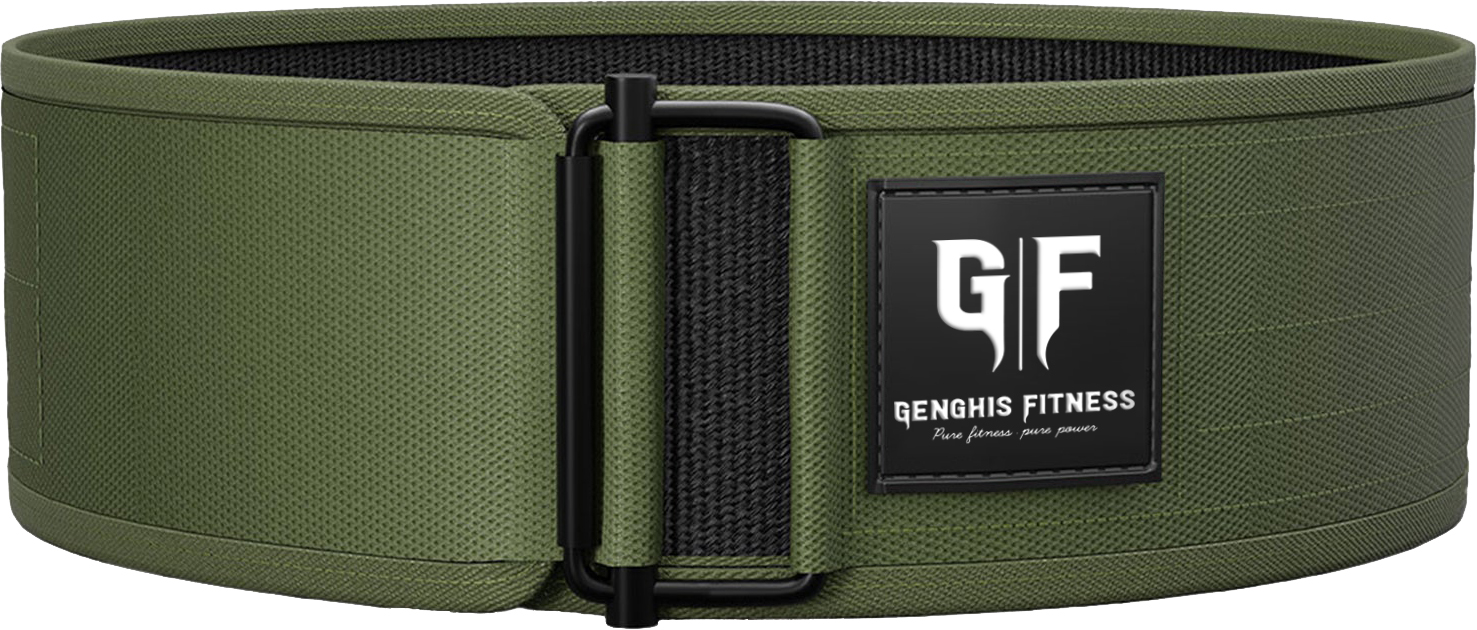
Olympic weightlifting requires a belt that supports the lumbar during the pull without restricting the hip and torso mobility needed in the receiving phase. Thinner, more flexible constructions are appropriate. The nylon lifting belt suits Olympic lifting well: stiffer than neoprene but more flexible than thick leather, with fast closure that allows quick removal between lifts or during transitions to accessory work without disrupting training rhythm.
Best Belt for CrossFit and Mixed Modality Training
CrossFit demands a belt that adjusts quickly, stays manageable across a session mixing heavy barbell work with gymnastics and conditioning, and does not restrict the range of motion required for Olympic-style movements. The nylon lifting belt tightens and loosens in seconds, stays in position during mixed-modality work, and provides genuine bracing support for the barbell elements of a CrossFit session without the management overhead of a leather competition belt.
Best Belt for General Strength Training
Athletes training with a mix of heavy compound lifts and accessory work without a specific competition focus need a belt that performs well across exercises and is comfortable throughout the full session. The 4-inch leather weightlifting belt is a solid all-purpose leather option for this application. The neoprene weightlifting belt is the most comfortable option for athletes who train at moderate intensities and prioritize warmth and sustained comfort over maximum bracing rigidity.
What to Avoid When Choosing a Belt
- Laminated leather construction that delaminates under repeated flexion cycles.
- Thin stamped metal buckles and levers that flex visibly under hand pressure before training loads are applied.
- Single-row stitching at the buckle or lever attachment point, the most common early failure mode.
- Belts with no published width or thickness specifications, indicating uncontrolled production standards.
- Selecting belt type based on appearance rather than the specific bracing properties your training style demands.
Long-Term Value: Evaluating Cost Per Year of Use
The best belt for long-term use is built from quality materials, correctly sized for your body, and maintained with basic leather conditioning two to four times per year. A quality leather belt cared for properly can last a decade or more of consistent training. A cheap belt failing at the stitching after 18 months of heavy use is not a bargain at any initial price. Evaluating cost per year of use rather than purchase price gives a more accurate comparison between quality tiers.
The NSCA recognizes belt use as an appropriate training tool for athletes performing heavy compound loading, and the equipment should be treated with the same standard as any other piece of training infrastructure that receives daily use.
Completing the Equipment Setup for Heavy Training
The best weightlifting belt addresses lumbar bracing for one component of a compound training session. The knee sleeves handle the knee joint during squats. The wrist wraps protect the wrist during heavy pressing. The lifting straps and leather weight lifting straps extend grip duration on heavy pulls past what the hands can manage bare. Each piece of equipment serves a specific role. A complete setup covers all the joint and grip demands of serious training without any single product being asked to do everything.
The powerlifting leather belt, nylon lifting belt, neoprene weightlifting belt, and 10mm lever belt cover the full spectrum of training applications. Matching the right belt to your training style is the starting point. Pairing it with the appropriate joint and grip accessories completes the picture for a serious compound training program.