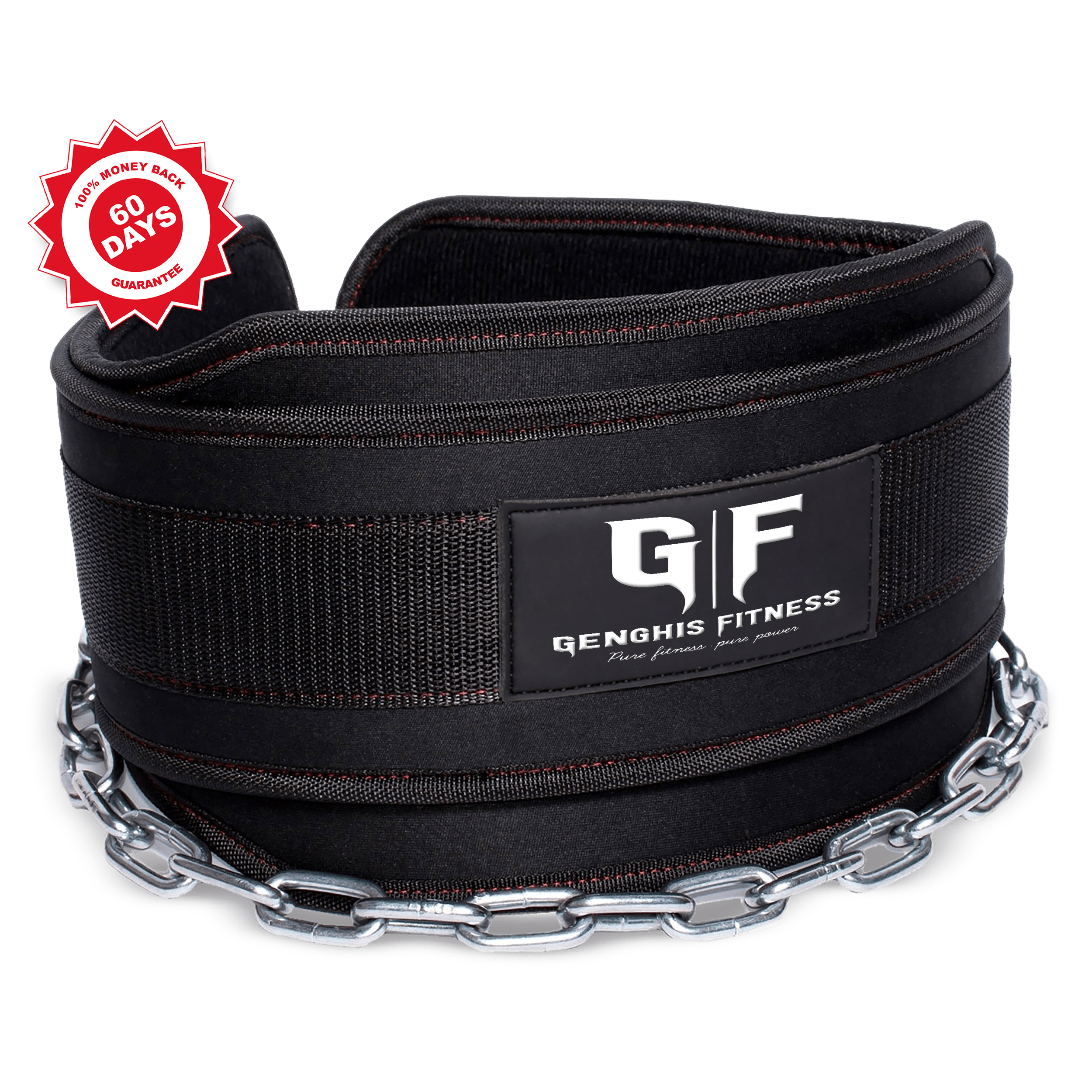
Exercise Weight Belt: What It Does, Who Needs It, and How to Use It Right
Walk into any gym and you will see weight belts on powerlifters grinding through heavy deadlifts, on CrossFit athletes moving through a barbell complex, and on casual gym members who picked one up because a friend recommended it. The belt is one of the most common pieces of gym equipment in existence. It is also one of the most misunderstood.
This guide explains the biomechanics behind exercise weight belts, which training scenarios call for one, how to wear and brace correctly to make the belt work, and what to look for when choosing between the styles available.
What an Exercise Weight Belt Actually Does
A lifting belt does not support your spine the way a back brace does. It does not hold your torso rigid or take the load off your muscles. What it does is give your core something rigid to push against, which makes the intra-abdominal pressure you generate during a lift harder and more complete.
Intra-abdominal pressure is the internal hydraulic force created when you brace your core before a heavy effort. Researchers at the National Institutes of Health have documented that increased intra-abdominal pressure during loaded lifting is associated with reduced compressive force on the lumbar vertebrae. The belt amplifies this pressure by giving the abdominal wall a surface to expand against. Without a belt, your core braces against the elastic resistance of your own musculature. With a belt, it braces against rigid leather or nylon, and the result is a measurably higher intra-abdominal pressure at the same effort level.
The practical outcome is that you can maintain a more stable spine position through a heavy compound lift, and you can often generate more force because the bracing mechanism is more complete.
Who Benefits from a Weight Belt During Exercise
Belts are most useful for athletes performing maximal or near-maximal loads in the squat, deadlift, Romanian deadlift, barbell row, overhead press, and clean. These movements load the spine significantly and require strong core bracing to maintain safe spinal position through the full range of motion.
General gym-goers doing moderate-weight accessory work, machine exercises, or bodyweight training do not typically need a belt. The belt’s purpose is to enhance bracing during heavy axial loading. On a leg press or cable row, the loading pattern is different and the belt provides minimal benefit.
Athletes in rehabilitation from a lower back injury should consult a physical therapist or sports medicine physician before using a belt. ACE Fitness notes that relying on a belt before fully rebuilding core strength can delay the neurological adaptations needed for long-term spine health. A belt is a performance tool, not a rehabilitation device.
Types of Exercise Weight Belts
Leather Powerlifting Belts
Thick leather belts, typically 10mm or 13mm in depth, provide the most rigid bracing surface available. They are the standard choice for powerlifting and heavy barbell training. The Genghis Fitness powerlifting leather belt is built for exactly this application. Leather belts require a break-in period but become personalized to your torso over time.
Nylon Belts
Nylon belts are lighter, more flexible, and faster to put on and take off. They are a popular choice for CrossFit, Olympic lifting, and functional fitness training where you transition between barbell work and bodyweight movements quickly. The Genghis Fitness nylon lifting belt is a solid option for athletes who prioritize versatility over maximum rigidity.
Neoprene Belts
Neoprene belts offer a middle ground between leather and nylon. They conform to the body easily, provide warmth to the lower back, and are comfortable for longer training sessions involving moderate loads. They are not the best choice for true maximum-effort powerlifting but work well for general strength training and bodybuilding rep work.
The Genghis Fitness neoprene weightlifting belt fits this category. If your training involves a mix of heavy compound lifts and higher-rep accessory work in the same session, a neoprene belt covers both ends of that range reasonably well.
How to Wear and Position a Weight Belt
Belt placement matters as much as belt quality. The belt should sit between the top of the hip crest and the bottom of the rib cage. Most athletes find the sweet spot one to two inches above the hip bone. The back panel of the belt should rest over the erector muscles, not on the spine itself.
Tightness is a common source of error. Many lifters cinch the belt as tight as possible before lifting. This is not optimal. The belt should be snug enough that you cannot fit a flat hand under it, but loose enough that your abdominal wall can expand into it when you take your brace. If the belt prevents expansion, it is too tight and will actually reduce intra-abdominal pressure rather than enhance it.
The correct sequence for a belted lift is: position the belt, take a deep breath into the belly (not the chest), brace hard against the belt by pushing the abdominal wall out in all directions, and then initiate the lift. Exhale either at the top of the movement or in a controlled manner through the concentric phase depending on the lift and load.
Breaking In a Leather Weight Belt
New leather belts are stiff. A 13mm competition belt fresh out of the box can feel like strapping a wooden board around your waist. This is normal and temporary. The break-in process involves repeated flexion cycles that compress and align the leather fibers around your body shape.
Wear the belt through 6 to 10 sessions before judging its fit. Some athletes accelerate the process by flexing the belt against a rounded surface like a foam roller. Apply a small amount of leather conditioner after the first two or three sessions to keep the fibers supple during the break-in. Do not force the break-in by soaking the belt in water, which can damage the structure of the hide.
Common Mistakes with Exercise Weight Belts
Wearing the Belt Too Early in the Warm-Up
The belt is for heavy work sets. Wearing it during warm-up sets reduces the training stimulus on core stabilizer muscles that benefit from unbelted loading. Work up to around 80 percent of your training max without the belt. Strap in for the heavy sets where spinal position and bracing are genuinely challenged.
Using the Belt Instead of Core Strength
A belt amplifies the core strength you already have. It cannot replace core strength you have not built. If your spinal position breaks down on moderate weights without a belt, adding a belt is masking a weakness rather than addressing it. Spend time on planks, dead bugs, bird dogs, and loaded carries to build the base strength that makes the belt effective when you do use it.
Loosening the Belt Between Every Set
Repeatedly removing and replacing the belt between sets wastes time and disrupts your warm-up rhythm. If the belt is comfortable, leave it on across your heavy work sets and remove it when you move to accessory movements or cardio. This also helps maintain the body temperature elevation in the lower back that comes with an active training session.
Pairing the Belt with Other Support Gear
Weight belts are often used alongside other protective equipment. Knee sleeves provide warmth and proprioceptive feedback during squats. Wrist wraps stabilize the wrist joint during pressing movements. Lifting straps reduce grip fatigue on heavy deadlifts and rows.
The Genghis Fitness knee sleeves and wrist wraps pair well with a weight belt for full-body heavy sessions. The key is using each piece of equipment for the specific purpose it serves rather than wearing everything for every set regardless of load.
How Long Does a Weight Belt Last
A quality leather belt used consistently and maintained properly can last 10 years or more. Nylon and neoprene belts wear faster depending on how aggressively they are trained in and how they are stored. The most common failure points are the stitching at the buckle attachment and the leather at the prong holes. Inspect these points periodically and condition the leather to extend the belt’s service life.
Choosing the Right Weight Belt for Your Training
If you train primarily in powerlifting movements at heavy loads, a thick leather belt with a prong or lever closure is the right tool. If your training is more varied and includes Olympic-style movements or circuit work, a nylon belt gives you the bracing benefit with less restriction and faster transitions. If you do general strength training with moderate loads and want comfort over long sessions, a neoprene belt is a practical choice.
The best exercise weight belt is the one that fits your training style, fits your body, and gets used consistently on the sets that actually benefit from added core bracing. Buy quality once, learn to use it correctly, and the investment pays off in safer training and stronger lifts for years.