Genghis Fitness · Powerlifting Gear and Technique
Powerlifting Grips: Every Grip Option for Competitive Powerlifting, When Straps Are Legal, and Grip Training for the Sport
Updated 2026 | By Team Genghis Fitness | 19 min read
Grip in competitive powerlifting is a more complex topic than in general strength training because competition rules restrict which grip aids are permitted in each discipline, and the three competition lifts (squat, bench press, deadlift) each have distinct grip demands and considerations. Understanding the rules, the optimal grip style for each lift, and the specific grip strength training that supports competition performance allows powerlifters to develop a complete grip strategy rather than treating it as an afterthought.
Competition Grip Rules: What Is and Is Not Permitted
Deadlift grip: In IPF (International Powerlifting Federation) and most affiliated raw federations, grip aids on the deadlift are restricted to chalk (magnesium carbonate) and the athlete’s own hands. Straps are not permitted in competition deadlifts for raw powerlifting. The competition deadlift must be performed bare-handed with optional chalk, using whatever grip the athlete chooses: double overhand, alternating (mixed), or hook grip.
Squat grip: The squat grip is not typically regulated beyond equipment specifications. Most powerlifters use a moderate-width pronated grip on the bar during the squat. Wrist wraps are permitted in both raw and equipped divisions up to specified length limits (1 meter maximum in most raw federations).
Bench press grip: The bench press must be performed with a closed grip (thumb wrapped around the bar) in IPF-affiliated competition. The false (thumbless) grip is prohibited due to safety concerns. Wrist wraps are permitted under the same rules as the squat.
The practical implication for competition deadlift: every powerlifter must develop sufficient bare-hand grip strength to complete all attempts at competition without any strap assistance. Competitive powerlifters who rely exclusively on straps in training inadequately develop the grip strength required for competition performance. A study published in the Journal of Strength and Conditioning Research confirmed that grip security directly affects maximum-effort force production, validating why competition-specific bare-hand grip training is a legitimate performance variable for powerlifters.
Competition Deadlift Grip Selection
Mixed (alternating) grip: The most common competition deadlift grip. One hand pronated, one supinated, preventing bar rotation. Allows heavier loads than double overhand for most athletes without the thumb discomfort of hook grip. Risk: the supinated arm carries elevated biceps tendon strain risk at maximum loads. Many experienced powerlifters alternate which hand is supinated across training sessions to distribute this asymmetric stress bilaterally over time.
Hook grip: The thumb locked under the fingers, creating a mechanical friction lock. No asymmetric loading. Competition-standard in Olympic weightlifting and increasingly used by powerlifters who want to avoid the mixed grip biceps injury risk. Requires 4 to 8 weeks of regular training to habituate to the thumb discomfort. After habituation, many powerlifters find hook grip as strong or stronger than mixed grip. Thumb tape on the hooked thumb is permitted in most federations and reduces discomfort.
Double overhand: Appropriate for training sets below approximately 85 percent of maximum where it provides adequate security while developing grip strength. Not the standard competition grip for maximum attempts except for athletes who have developed exceptional grip strength relative to their pulling strength.
Grip Training for Powerlifting Competition
Powerlifters who use straps for all training pulls outside of competition practice develop a grip strength gap: their posterior chain can handle loads their grip cannot support bare-handed at competition. The solution is a deliberate training structure that develops grip alongside pulling strength.
Comp-grip sets: At least 2 to 3 sets per week of deadlifts performed with the competition grip (mixed or hook) without straps. These sets train the specific grip pattern used in competition and develop the grip strength capacity needed to match competition loads. They do not need to be maximum-effort; 75 to 85 percent of maximum with competition grip for 3 to 5 reps is sufficient grip stimulus while managing fatigue.
Strap use for supplementary volume: Heavy volume sets of deadlifts and rows beyond what comp-grip capacity allows can be performed with straps to allow the posterior chain training stimulus without grip becoming the limiting variable on those sets. The comprehensive protocol for when to use straps vs train bare-handed is in our belt, straps, and chalk guide.
Accessory grip work: Farmer’s carries, dead hangs with progressive loading, and thick bar training (if available) develop the forearm and finger flexor strength that transfers to both mixed and hook grip performance at competition loads. The lifting straps for supplementary volume allow training the posterior chain to true capacity while preserving hand recovery for comp-grip work.
Frequently Asked Questions
Are Lifting Hooks Legal in Powerlifting Competition?
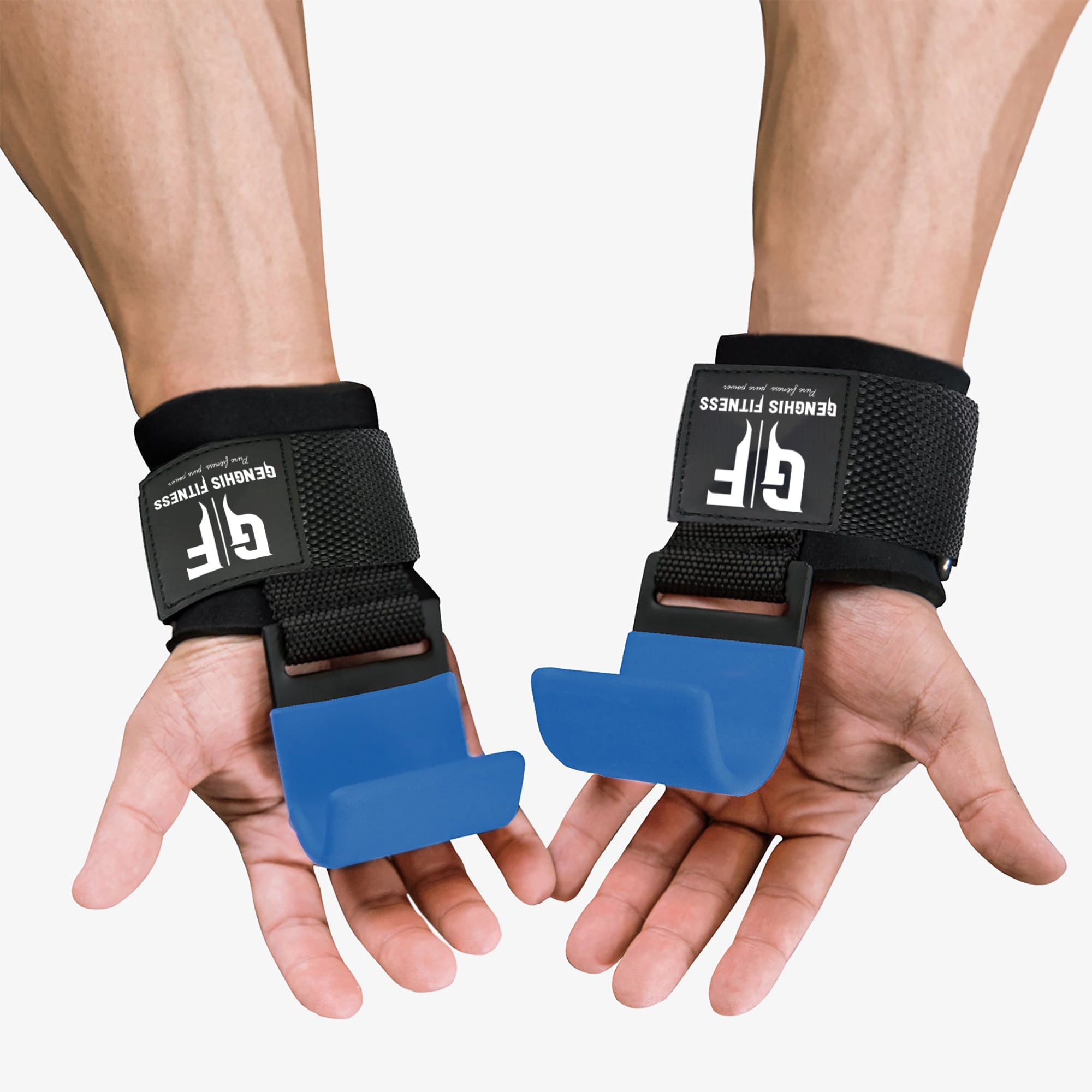
No. Lifting hooks are not permitted in IPF or most affiliated raw powerlifting federations for any of the three competition lifts. They are training tools only. For athletes who use hooks in training for maximum-load pulling accessory work, they need to ensure adequate competition-grip training is included in their program separately, as hooks provide no grip strength training stimulus.
How Close Should Your Competition Grip Strength Be to Your Competition Total?
The goal is for bare-hand competition grip to support at least 105 percent of your planned opening deadlift attempt. This provides a comfortable margin so that grip is never a concern on any competition attempt. If your bare-hand maximum is below your planned opener, grip is a competition vulnerability that needs targeted training before the meet. Discovering this deficit at competition rather than in training is one of the most preventable performance failures in powerlifting.
Train the Grip. Compete with Confidence.
Straps for supplementary volume. Bare hands for comp-grip work. Both done right with the right gear.
Shop Lifting Straps Shop Wrist WrapsHow Powerlifting Grips Differ From Standard Gym Gloves
The distinction matters more than most new lifters realize. Standard gym gloves are designed primarily for comfort. They pad the palm to reduce callus formation and provide a bit of grip texture on smooth surfaces. They are built for moderate loads, light to moderate rep ranges, and movements where you do not need the bar to feel locked to your hand. At heavier weights, the padding in a standard glove actually works against you by creating compression between your hand and the bar that makes the bar feel less stable, not more.
Powerlifting grips are engineered for load transfer under maximum tension. They use minimal padding at the contact points to keep the bar close to the hand, and they focus material where it matters: across the proximal palm and the base of the fingers where the bar actually sits during a heavy pull. Quality powerlifting grips use leather, high-density neoprene, or a combination of materials that do not compress significantly under load. The goal is not comfort. The goal is maintaining bar position from the first rep of a working set through the last rep of the final set. Arm blasters complement grip training by isolating the bicep in curl movements where wrist position and elbow stability directly affect how effectively you can maintain tension through the full range of motion.
Grip Positioning And Rep Range Recommendations
Most powerlifting grip problems trace back to bar position in the hand rather than grip strength deficiency. The bar should sit across the proximal palm, just above the callus line, not in the fingers. When the bar sits in the fingers, the wrist has to work overtime to maintain extension under load, which fatigues the forearm and creates the feeling of grip failure even when actual grip strength is not the limiting factor. Positioning the bar correctly across the palm distributes the load over a larger surface area, keeps the wrist neutral, and dramatically extends how long you can hold a given weight without the grip compromising the set.
Use powerlifting grips for your top sets and any set within 20 percent of your working maximum. For warm-up sets and accessory work at lighter loads, training without grips builds the hand strength and callus development that becomes your foundation for all heavier work. Chalk on its own is a legitimate tool for moderate loads and should be the first thing you reach for before adding any external grip aid. Grips and straps come in when chalk alone is no longer enough to maintain bar position through a full working set.
Certified strength and conditioning specialists with over 10 years of experience in powerlifting, nutrition, and evidence-based fitness content. Based in New York City.