Genghis Fitness · Equipment Maintenance
Caring for Your Weightlifting Belt: The Complete Maintenance Protocol for Leather, Nylon, and Neoprene Belts to Maximise Lifespan
Updated 2026 | By Team Genghis Fitness | 22 min read
A quality weightlifting belt is a significant training investment, and the difference between a belt that lasts 5 years and one that lasts 20 years often comes down entirely to post-session care, storage practice, and periodic conditioning. The specific maintenance needs vary significantly by belt material: the leather belt care protocol that preserves full-grain leather for decades would damage a neoprene belt, and the frequent washing appropriate for nylon is inappropriate for leather. This guide covers the complete material-specific care protocol for each belt type, structured around the daily, monthly, and annual maintenance tasks that together maximise belt lifespan.
Daily Care: The 2-Minute Post-Session Protocol
The most impactful single maintenance action is the immediate post-session routine. For leather belts: wipe the inner surface with a dry cloth to remove sweat before it dries and draws moisture from the leather fibres. Unroll the belt completely and hang it or lay it flat in a well-ventilated area to air dry. Do not seal the belt in a gym bag while still warm and damp. For nylon belts: air dry in the same way, which is sufficient for daily care given nylon’s moisture resistance. For neoprene belts: air dry completely before storage and rinse with cool water once per week to remove sweat residue that accelerates neoprene degradation over time. This 2-minute routine, performed after every training session, prevents the moisture retention and salt accumulation that cause the majority of premature belt deterioration across all materials. Research on leather material degradation under moisture and salt exposure published in the Journal of Materials Science confirmed that sweat salt residue significantly accelerates leather fatigue and crack initiation when allowed to dry repeatedly into the leather surface, directly supporting the importance of post-session sweat removal for leather belt longevity.
Monthly Care: Conditioning and Inspection
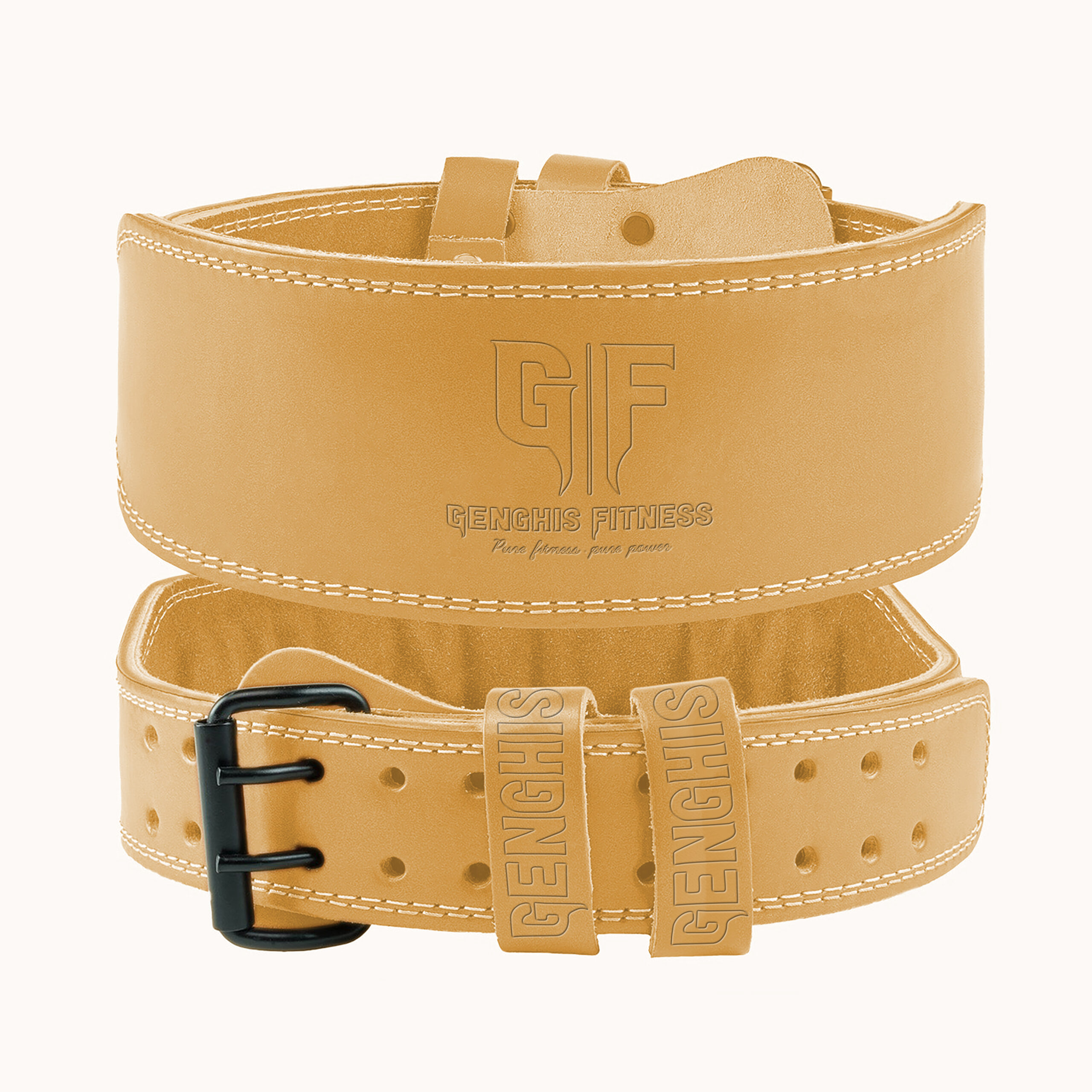
Monthly maintenance adds the conditioning and structural inspection steps that daily care does not cover. For leather belts: apply neatsfoot oil or a commercial leather conditioner to both surfaces, working it into the leather with a soft cloth. Apply particular attention to the areas that flex most frequently during training: the belt body at the narrowest trunk points and the leather near the buckle attachment where the belt repeatedly bends during putting on and taking off. Inspect the prong holes or lever attachment area for early wear, the stitching at all attachment points for any separation, and the leather body for surface cracking. For nylon belts: machine wash in a mesh laundry bag on a gentle cold cycle and air dry. Inspect the velcro closure for grip retention. For neoprene belts: hand wash with mild soap and water, rinse thoroughly, and air dry. Inspect neoprene compression retention by compressing the belt body with both hands: quality neoprene springs back fully; degraded neoprene shows permanent compression. The Genghis Fitness powerlifting leather belt and 10mm lever belt are constructed from full-grain leather that responds to this conditioning protocol with decades of maintained performance.
Annual Care: Hardware Maintenance and Deep Assessment
Annual maintenance addresses the hardware components and structural integrity that monthly care does not cover. For lever belts: remove the lever mechanism from the belt, clean all contact surfaces with a dry cloth, apply a drop of machine oil to the lever pivot point, verify that the pivot pin is not bent or deformed, and re-install the mechanism. Check that the lever snaps fully closed and holds under firm pressure. For prong belts: check the prong pin for bending and the prong hinge for smooth operation. Apply petroleum jelly or machine oil to the hinge point and the prong contact surfaces. Check the D-ring or bar through which the belt strap passes for any deformation that affects smooth adjustment. For all belt materials: perform a full structural assessment of the belt body (leather, nylon, or neoprene), checking for any thinning, cracking, or structural changes that predict reduced performance or failure under load. Annual assessment identifies developing issues before they become training disruptions or safety concerns, and allows conditioning or replacement decisions to be made proactively rather than reactively. The complete leather belt storage protocol is in our belt storage guide.
When to Replace a Weightlifting Belt
Replacement indicators differ by belt material and design. For leather belts: replace when through-thickness cracks appear at any point in the belt body that bears training load, when the leather body has softened to the point of no longer providing meaningful IAP support, or when buckle hardware shows irreparable mechanical failure. For nylon belts: replace when the velcro closure no longer holds under moderate pulling force, indicating that the hook fibres have worn below functional density, or when the nylon body shows significant fraying or thinning. For neoprene belts: replace when the neoprene has permanently compressed at the contact areas to the extent that the belt no longer provides meaningful compressive support around the trunk. The key principle across all belt types is proactive replacement based on inspection findings rather than reactive replacement after failure during training. Any component that shows progressive deterioration toward a failure threshold should trigger replacement planning before the threshold is reached.
Caring for the Complete Training Belt Collection
Many serious athletes own multiple belts serving different purposes: a 10mm leather lever belt for competition and maximum-effort training, a nylon or prong leather belt for general training use, and potentially a neoprene belt for lower-intensity sessions. Maintaining all of these belts correctly as part of a monthly equipment maintenance routine ensures the complete collection remains functional and reliable. A 20 to 30 minute monthly session covering the leather belt conditioning, nylon belt washing, neoprene belt inspection, and hardware lubrication for the lever mechanism addresses all belt maintenance needs simultaneously. Extending this routine to include knee sleeve washing, wrist wrap inspection, and strap conditioning covers the complete training equipment kit in a single efficient session. Athletes who maintain their full equipment collection systematically reduce total equipment replacement costs and ensure reliable performance from every piece of training equipment across years of serious use.
Frequently Asked Questions
Can You Machine Wash a Leather Weightlifting Belt?
No. Machine washing saturates leather fibres with water, strips the natural oils, and can cause permanent warping, stiffening, and cracking as the leather dries. The correct approach for leather belts is surface cleaning with a slightly damp cloth followed by air drying and conditioning. For heavily soiled leather, saddle soap applied with a damp cloth and wiped off completely is the appropriate deeper cleaning method. Never submerge leather belts in water or expose them to machine washing or tumble drying.
How Do You Remove Chalk Build-Up from a Belt?
Chalk accumulation on the belt outer surface (from contact with chalk-covered bars) can be removed by brushing with a soft bristle brush to remove loose chalk, followed by wiping with a barely damp cloth for leather, or rinsing under cool running water for nylon and neoprene. Chalk left to accumulate on a leather belt surface over months of training draws moisture from the leather as it absorbs humidity and dries, contributing to leather brittleness at the chalk accumulation zones. Regular chalk removal after training sessions prevents the gradual brittleness that accumulated chalk causes in leather belt surfaces.
Care for the Belt That Carries the Weight. It Will Last a Career.
Two minutes after each session compounds to decades of reliable performance.
Shop Powerlifting BeltShop 10mm Lever BeltCertified strength and conditioning specialists with over 10 years of experience in powerlifting, nutrition, and evidence-based fitness content. Based in New York City.
The complete weightlifting belt guides answers every belt question in one place: which type suits your training, how to size correctly, how to break in leather, and how to brace with a belt for maximum intra-abdominal pressure.